

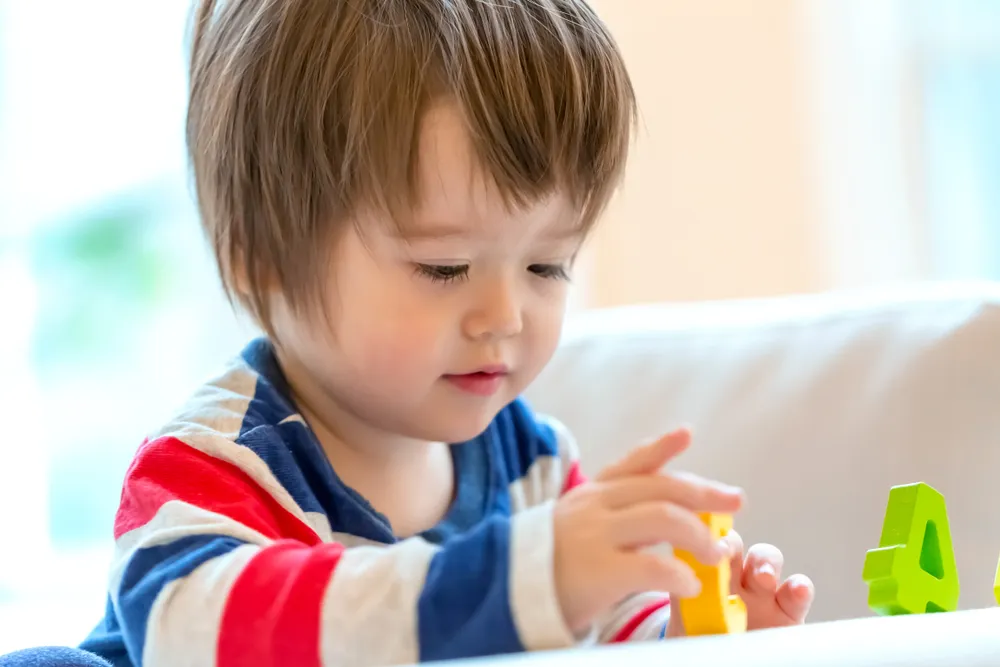
The toddler years bring remarkable changes. One week, your child may be taking careful steps while holding your hand; soon after, they may be running toward a favorite toy, combining words, acting out imaginative stories, and insisting on completing everyday tasks independently.
Because toddler development happens so quickly, choosing an early-learning environment can feel like a major decision for Irvine parents. You want a place where your child feels safe and understood, but you also want meaningful opportunities for movement, communication, exploration, play, and social connection.
This guide explains the main areas of development between approximately one and three years of age, the activities that support emerging skills, and what to look for when comparing toddler care in Irvine. It also introduces DeeCyDa’s Caterpillar Program as one local option for families seeking play-based toddler care.
Developmental milestones are general guides, not strict deadlines. Every child follows an individual path, and childcare should never replace developmental screening, medical guidance, therapy, or early-intervention services.
Contents
- 1 What Does Toddler Development Include?
- 2 Why the Toddler Years Matter for Early Learning
- 3 How a Toddler Development Program Supports Growth
- 4 What a Developmentally Appropriate Toddler Day Looks Like
- 5 Toddler Development Milestones: A Flexible Parent Guide
- 6 How to Choose a Toddler Development Program in Irvine
- 7 Inside DeeCyDa’s Caterpillar Toddler Program in Irvine
- 8 How Parents Can Support Toddler Development at Home
- 8.1 Read Together Every Day
- 8.2 Narrate Ordinary Routines
- 8.3 Offer Two Appropriate Choices
- 8.4 Encourage Safe Movement
- 8.5 Use Songs and Fingerplay
- 8.6 Provide Simple, Open-Ended Toys
- 8.7 Allow Time for Independent Attempts
- 8.8 Name and Validate Emotions
- 8.9 Maintain Predictable Routines
- 8.10 Communicate With Caregivers
- 9 When to Ask for Additional Developmental Support
- 10 Is DeeCyDa’s Toddler Development Program Right for Your Family?
- 11 Conclusion
- 12 Frequently Asked Questions
- 12.1 What is toddler development?
- 12.2 What ages are included in DeeCyDa’s toddler program?
- 12.3 What should a toddler development program include?
- 12.4 How does play-based learning support toddlers?
- 12.5 Can toddler daycare help children develop social skills?
- 12.6 What should parents ask during a toddler daycare tour?
- 12.7 How can parents support toddler development at home?
- 12.8 What should I do if I am concerned about my child’s development?
- 12.9 How many toddlers are assigned to each teacher at DeeCyDa?
- 12.10 How can I schedule a visit to DeeCyDa in Irvine?
What Does Toddler Development Include?
Toddler development includes the physical, cognitive, communication, social, emotional, and self-help skills children gradually build between approximately one and three years old. These areas develop together through responsive relationships, active play, repetition, safe exploration, and everyday routines. Children may reach individual milestones at different times.
The federal Head Start Early Learning Outcomes Framework organizes early learning into interconnected areas that include approaches to learning, social and emotional development, language, cognition, and physical development. A toddler may practice several of these areas during one simple activity.
For example, building a block tower uses hand coordination, problem-solving, attention, and spatial awareness. Building beside another child also creates opportunities to observe a peer, communicate, manage emotions, and practice early cooperation.
Physical and Motor Development
Physical development includes both gross motor skills, which use larger muscles, and fine motor skills, which involve smaller movements of the hands and fingers.
During the toddler years, many children become increasingly interested in walking, running, climbing, carrying objects, dancing, kicking balls, and moving through different spaces. Safe indoor and outdoor activities give toddlers opportunities to practice balance, coordination, body awareness, and confidence.
Fine motor development can be supported through activities such as:
- Stacking blocks
- Turning board-book pages
- Making marks with toddler-safe crayons
- Fitting simple puzzle pieces
- Handling spoons and cups
- Picking up and sorting larger objects
- Connecting age-appropriate building pieces
The goal is not to make every movement perfect. Toddlers need safe, supervised opportunities to try, repeat, make mistakes, and try again.
Language and Communication Development
Communication begins long before a child can hold a conversation. Toddlers communicate through facial expressions, gestures, pointing, sounds, body language, individual words, and gradually expanding phrases.
Responsive adults can support toddler language development by naming familiar objects, describing actions, pausing for a response, expanding on a child’s words, and repeating useful language during everyday routines. When a child points to a ball, for example, an adult might respond, “You found the blue ball. Would you like to roll it?”
Interactive reading, songs, repetition, and simple conversations provide language in an enjoyable context. Children also develop receptive language—the ability to understand what they hear—even when they cannot yet express the same ideas verbally.
Cognitive Development and Problem-Solving
Cognitive development in toddlers involves attention, memory, exploration, cause and effect, early reasoning, and problem-solving.
Toddlers may investigate what happens when they drop, stack, fill, empty, push, pull, match, or sort objects. They begin remembering where familiar materials belong and may use one object to represent another during pretend play.
Useful cognitive activities include simple puzzles, nesting cups, blocks, shape sorters, pretend kitchens, sensory containers, and supervised experiments with water or natural materials. Open-ended activities are especially valuable because they allow children to make choices and test their own ideas.
Social and Emotional Development
Social-emotional development begins with secure, responsive relationships. Toddlers rely on trusted adults to help them understand unfamiliar situations, express needs, and manage emotions that may feel overwhelming.
At this age, children often play near one another before they consistently play together. This is commonly called parallel play. A toddler may watch another child, imitate an action, reach for the same toy, or briefly participate in a shared activity.
Sharing and turn-taking are still developing. Instead of expecting toddlers to manage every interaction independently, caregivers can model useful language, offer alternatives, set calm boundaries, and help children wait for short periods.
The importance of responsive care is also emphasized in federal developmentally appropriate practice guidance for infants and toddlers. Caregivers who notice children’s cues and respond in nurturing, individualized ways help create a foundation for emotional security.
Independence and Everyday Skills
Toddlers frequently want to participate in daily routines. They may try to feed themselves, wash their hands, carry a napkin, put toys in a basket, choose between two shirts, or attempt part of the dressing process.
These efforts can take longer and may become messy, but they are meaningful learning opportunities. Adults can encourage independence by breaking tasks into manageable steps and offering help without taking over immediately.
Small choices can also give toddlers an appropriate sense of control. “Would you like the red cup or the blue cup?” is usually more manageable than an open-ended question with too many possibilities.
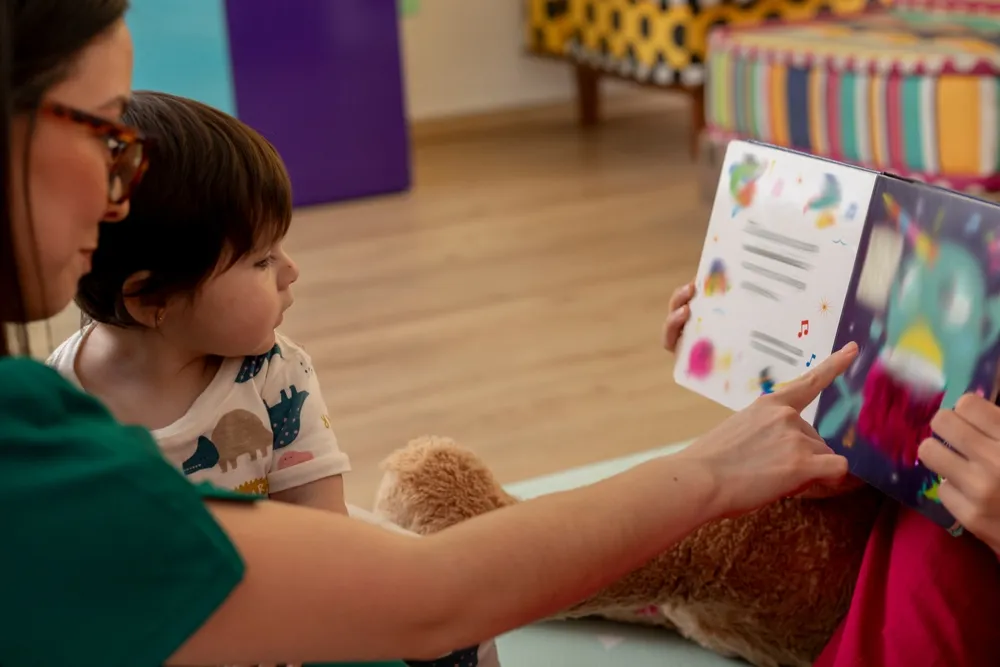
Why the Toddler Years Matter for Early Learning
The toddler years are a period of rapid learning, but development does not require constant academic instruction. Young children learn through relationships, communication, movement, imitation, repetition, and direct exploration.
The CDC’s child development resources emphasize that families, health professionals, educators, and others all contribute to children’s growth. Early learning works best when these adults communicate and support the child consistently.
Responsive relationships are especially important. When a caregiver follows a child’s attention, responds to a gesture, names an emotion, or joins an activity, the child receives both information and reassurance.
Repetition also matters. A toddler may request the same book, song, or activity many times. While repetition can feel predictable to an adult, it gives a young child opportunities to remember what comes next, recognize patterns, practice language, and participate with growing confidence.
How a Toddler Development Program Supports Growth
A thoughtfully designed toddler development program complements learning at home by providing responsive care, developmentally appropriate activities, social opportunities, movement, and consistent routines.
The strongest programs do not rush toddlers into formal academics. They create a balanced environment where children can explore while caregivers intentionally support emerging skills.
Play-Based Learning
Play-based learning for toddlers is purposeful without becoming overly structured. Children make choices, investigate materials, imitate everyday situations, communicate ideas, and repeat actions that interest them.
Examples may include:
- Pretending to cook or care for a doll
- Building and knocking down a block tower
- Exploring supervised sensory materials
- Dancing to music
- Looking through books with a caregiver
- Rolling a ball to another child
- Sorting objects by a visible characteristic
- Exploring safe outdoor surfaces and equipment
Federal early-learning guidance recognizes play, exploration, discovery, and problem-solving as important parts of developmentally appropriate learning.
Consistent Routines and Emotional Security
Predictable routines help toddlers understand what is happening now and what will happen next. Familiar patterns around arrival, meals, play, rest, transitions, and pickup can make the day feel more manageable.
According to Head Start guidance on schedules and routines, predictable activities can help young children feel secure and participate in learning. However, consistency should not mean rigidity. A toddler program should still respond to individual comfort, energy, and care needs.
Interaction With Responsive Caregivers
A responsive caregiver observes before reacting. The caregiver notices whether a child is tired, curious, hesitant, frustrated, or seeking connection and then responds calmly.
During a program tour, notice whether caregivers:
- Get down to children’s eye level
- Use warm and respectful language
- Respond to gestures and communication attempts
- Guide emotions without shaming
- Allow time for children to answer
- Join children’s play without controlling every activity
- Adjust support according to individual needs
These everyday interactions often tell you more about a program’s approach than decorations or marketing materials.
Opportunities to Learn With Other Children
Toddler daycare can offer regular opportunities to watch, imitate, and communicate with peers. Group music, shared stories, outdoor play, and side-by-side activities introduce children to early social experiences.
Toddlers should not be expected to share perfectly or resolve every disagreement alone. Caregivers can support toddler social skills by naming the situation, protecting safety, modeling simple phrases, and helping children take short turns.
Small-Group Attention
Manageable group sizes can make it easier for caregivers to notice children’s interests, communication attempts, preferences, and support needs.
Parents should ask how many children and adults are present throughout the day—not only during planned activities. DeeCyDa publishes a ratio of six toddlers per teacher for its Caterpillar Program. Families should discuss how staffing works during meals, outdoor activity, rest periods, transitions, and staff breaks.
What a Developmentally Appropriate Toddler Day Looks Like
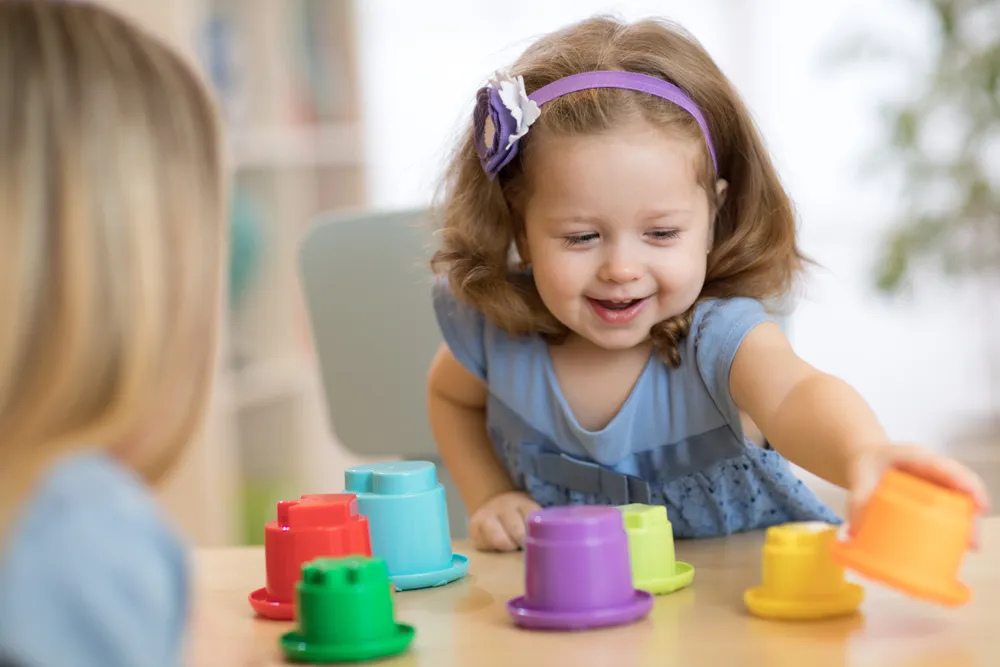
A toddler day should balance activity and rest, individual exploration and group participation, familiar routines and flexible responses. The following is an example, not DeeCyDa’s confirmed daily schedule:
- A warm arrival and personal caregiver greeting
- Child-directed exploration with open-ended materials
- Interactive storytime
- Music, dancing, or movement
- Sensory or creative play
- Meals and snacks
- Indoor and outdoor activity
- Peer interaction
- Quiet or rest time
- Flexible transitions between activities
- A brief parent update at pickup
Toddlers are active learners, but they also need time to observe, repeat an activity, rest, and reconnect with a caregiver. A balanced program does not need to keep children constantly busy or turn every moment into a formal lesson.
Toddler Development Milestones: A Flexible Parent Guide
The CDC’s developmental milestone checklists cover how children play, learn, speak, act, and move at different ages. The CDC also explains that milestone checklists are not diagnostic or developmental-screening tools.
Between approximately one and three years of age, you may notice changes in several areas:
Movement
Many children begin moving from supported steps to more independent walking, climbing, running, kicking, carrying, and navigating familiar environments. Hand coordination may become more controlled during eating, building, drawing, and page-turning.
Communication
Toddlers may progress from gestures, sounds, and individual words toward naming familiar objects, following simple directions, and using increasingly complex phrases. Understanding may develop faster than spoken expression.
Play and Thinking
You may notice experimentation with cause and effect, simple matching, early sorting, pretend play, puzzles, building, and remembering familiar sequences.
Social Connection
Toddlers often become more aware of peers, imitate other children, participate in short group experiences, and seek help from trusted adults during social challenges.
Emotions
Big emotional reactions are common because toddlers’ desires may be stronger than their current ability to communicate or self-regulate. Calm adult support helps children gradually develop ways to express and manage feelings.
Independence
Many children begin showing stronger preferences and attempting parts of feeding, dressing, handwashing, cleanup, and other routines.
Development varies. Milestones are guides, not deadlines. If your child has lost a skill, is not meeting one or more milestones, or you have another concern, speak with your child’s pediatrician and ask about developmental screening.
How to Choose a Toddler Development Program in Irvine
The City of Irvine’s childcare guidance recommends checking licensing and history, contacting programs, scheduling tours, and asking about curriculum, hours, safety practices, qualifications, and ratios.
The City provides information and referrals but does not endorse individual providers. Families should personally evaluate each program before enrolling.
Licensing and Basic Safety
Confirm the program’s license and review its status through the California Community Care Licensing Division. DeeCyDa publishes childcare license number #304313821, but parents can still independently confirm licensing information.
During your visit, ask about:
- Active supervision
- Childproofing
- Emergency procedures
- Illness policies
- Cleaning and sanitation
- Allergy communication
- Authorized pickup
- Staff training
- Indoor and outdoor safety
Caregiver-to-Child Ratio
Ask how many children are present and how many caregivers are actively supervising them. Find out whether the ratio changes during transitions, meals, rest periods, outdoor play, or staff breaks.
A published ratio is useful, but observation helps you understand how staffing works in practice.
Caregiver Responsiveness and Communication
Look beyond whether a room appears quiet or orderly. Observe how adults respond when a toddler cries, refuses an activity, reaches for another child’s toy, or needs help communicating.
Caregivers should use respectful language, maintain appropriate boundaries, and help children move through difficult moments without humiliation or fear.
The Role of Play
A toddler environment should offer more than worksheets or adult-led instruction. Look for books, blocks, art materials, music, movement, pretend-play materials, sensory experiences, and safe outdoor opportunities.
Ask how educators select activities and adapt them to children’s interests and developmental needs.
Daily Routines and Flexibility
Children benefit from knowing what comes next, but toddlers also have individual rhythms. Ask how the program handles rest, transitions, separation, meals, toilet-learning readiness, and changes in a child’s needs.
Parent Partnership
Open communication helps families and caregivers respond consistently. Ask what information you will receive at pickup and how the program handles questions, transitions, comfort strategies, family preferences, and home languages.
Questions to Ask During a Toddler Program Tour
- What is the caregiver-to-child ratio throughout the day?
- How do you help toddlers adjust during their first weeks?
- How do caregivers respond to crying or big emotions?
- What does a typical day include?
- How much time do children spend indoors and outdoors?
- How do you support language and communication?
- How do you handle peer conflicts and emerging sharing skills?
- How are meals, rest, diapering, and toilet-learning needs managed?
- How do you communicate with parents about the child’s day?
- How can activities or routines be adapted to individual needs?
Once you have considered these questions, you can explore DeeCyDa’s childcare programs and arrange a visit to compare the environment with your family’s priorities.
Inside DeeCyDa’s Caterpillar Toddler Program in Irvine
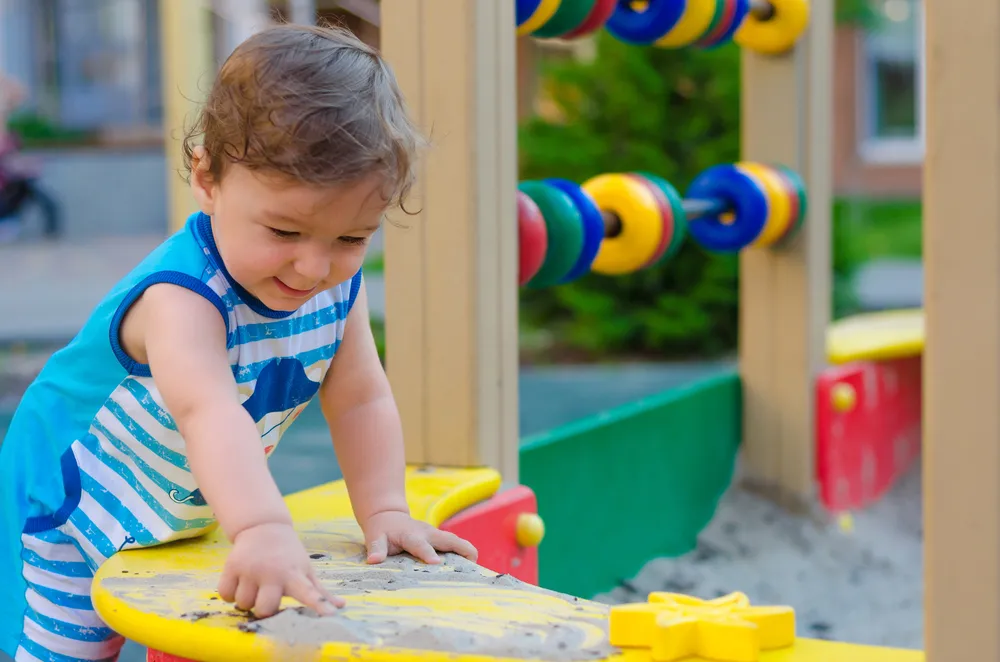
DeeCyDa’s Caterpillar Program is designed for children from one to 2.9 years old at its Irvine, California 92603 location.
The program’s published approach includes play-based activities such as:
- Interactive reading and storytime
- Pretend play
- Building blocks and Duplo
- Sensory activities and toys
- Music and dancing
- Indoor and outdoor activities
- Opportunities for peer socialization
DeeCyDa publishes a class ratio of six toddlers per teacher. The Caterpillar Program is listed as available year-round, with half-day hours from 8:00 a.m. to 2:00 p.m. and full-day hours from 8:00 a.m. to 5:00 p.m.
DeeCyDa’s broader offerings include Spanish, Mandarin, Farsi, and American Sign Language. Parents interested in multilingual exposure should ask the team how and when specific languages are incorporated into their child’s experience.
These features describe the program’s structure and activities; they do not guarantee a particular developmental outcome. The best way to evaluate fit is to meet the caregivers, see the environment, and discuss your toddler’s temperament, routines, communication, and support needs.
Families who feel the program may be a match can begin the enrollment process or contact the DeeCyDa team with questions.
How Parents Can Support Toddler Development at Home
Supporting learning at home does not require an elaborate curriculum. Ordinary routines provide meaningful opportunities for language, movement, connection, and independence.
Read Together Every Day
Choose short books that your toddler enjoys. Name pictures, pause for reactions, ask simple questions, and let your child turn the pages. Repeating the same book is useful.
Narrate Ordinary Routines
Describe what you and your child are doing: “We are washing your hands,” or “You put the spoon on the table.” This connects language with familiar actions.
Offer Two Appropriate Choices
Simple choices can support communication and independence without becoming overwhelming.
Encourage Safe Movement
Walking, dancing, carrying lightweight objects, rolling balls, and supervised outdoor exploration support physical development.
Use Songs and Fingerplay
Songs combine rhythm, repetition, language, memory, and movement. Your child does not need to sing every word to participate.
Provide Simple, Open-Ended Toys
Blocks, containers, balls, scarves, dolls, and safe household materials can inspire many kinds of play.
Allow Time for Independent Attempts
When it is safe, pause before stepping in. Your toddler may need extra time to place a toy, use a spoon, put an item away, or communicate a need.
Name and Validate Emotions
Simple phrases such as “You are disappointed because playtime ended” give children language for their experiences while maintaining a necessary boundary.
Maintain Predictable Routines
Familiar patterns around waking, meals, leaving home, and bedtime can help children anticipate what happens next.
Communicate With Caregivers
Share changes in sleep, health, routines, preferences, or communication. Consistent information can help home and childcare caregivers support the child together.
Parents can also read more early-childhood resources for practical ideas related to childcare and early learning.
When to Ask for Additional Developmental Support
Developmental monitoring and developmental screening are related but different.
Monitoring means observing how your child plays, communicates, learns, behaves, and moves over time. Parents, caregivers, and educators can all contribute observations.
A formal screening uses a validated tool or questionnaire and is completed by a healthcare provider or another trained professional. It offers a more structured review of development but is not automatically a diagnosis.
The Orange County Health Care Agency’s developmental-screening guidance encourages parents with concerns to speak with their child’s doctor and ask about screening. The resource also identifies local pathways such as Help Me Grow Orange County and California’s Early Start program.
Contact your child’s pediatrician if you are concerned about a skill, notice that your child has lost a previously used skill, or simply feel that something deserves closer attention. A childcare provider can share observations, but childcare does not replace medical evaluation, screening, therapy, or early-intervention services.
Is DeeCyDa’s Toddler Development Program Right for Your Family?
A program that works well for one toddler may not be the best fit for another. Consider your child’s temperament, separation experience, daily schedule, communication style, rest needs, home language, comfort in groups, and need for individualized support.
DeeCyDa’s Caterpillar Program may appeal to Irvine families seeking a year-round, play-based setting with storytime, music, sensory exploration, movement, building activities, and peer interaction.
Published information is a useful starting point, but an in-person visit provides valuable context. Observe how your child responds to the environment, ask how caregivers handle daily care situations, and discuss any preferences or concerns openly with the team.
Conclusion
Quality toddler care combines nurturing relationships, active play, movement, communication, predictable routines, social opportunities, and respectful family partnership. It should give children room to explore while providing the reassurance and guidance they still need from trusted adults.
Although developmental milestones can help parents know what to observe, every child follows an individual path. A responsible toddler development program supports emerging skills without comparing children unfairly, rushing them into formal academics, or promising guaranteed outcomes.
When comparing toddler care in Irvine, consider what you see and hear during the visit. Notice how caregivers communicate, how activities are balanced, whether routines are both predictable and flexible, and whether you feel comfortable discussing your child’s needs.
Schedule a visit to DeeCyDa’s Caterpillar Program in Irvine to meet the team, explore the environment, and decide whether it feels right for your toddler.
Frequently Asked Questions
What is toddler development?
Toddler development is the gradual growth of physical, cognitive, communication, social, emotional, and self-help skills between approximately one and three years of age. These areas are interconnected and develop through relationships, play, repetition, routines, and exploration. Children develop at different rates, so milestones should be treated as useful guides rather than strict deadlines.
What ages are included in DeeCyDa’s toddler program?
DeeCyDa’s Caterpillar Program is designed for children from one to 2.9 years old. The program is offered year-round at DeeCyDa’s Irvine location. Families should contact the center directly to confirm current availability, scheduling options, enrollment requirements, and whether the program can accommodate their child’s individual care needs.
What should a toddler development program include?
A well-balanced program should include responsive caregivers, safe movement, open-ended play, language-rich interactions, sensory exploration, books, music, outdoor activity, rest, predictable routines, and opportunities to interact with peers. Activities should be appropriate for individual children rather than relying entirely on formal academic instruction or expecting every toddler to develop at the same pace.
How does play-based learning support toddlers?
Play allows toddlers to explore cause and effect, practice movement, communicate ideas, solve simple problems, imitate everyday experiences, and interact with other people. Activities such as blocks, pretend play, music, sensory materials, and outdoor exploration may involve several developmental areas at once. Caregivers can extend learning by observing, describing, asking simple questions, and responding to children’s interests.
Toddler daycare can provide opportunities to watch peers, play beside other children, join group activities, communicate needs, and practice taking turns with adult support. Toddlers are still learning how to share and manage disagreements. Responsive caregivers should guide these interactions calmly instead of expecting children to resolve every social challenge independently.
What should parents ask during a toddler daycare tour?
Ask about licensing, caregiver-to-child ratios, daily routines, active supervision, caregiver training, communication with families, outdoor time, meals, rest, separation support, illness procedures, and responses to big emotions. You should also ask how activities are adapted to different abilities, temperaments, communication styles, home languages, and individual care needs.
How can parents support toddler development at home?
Read, sing, talk, and play together during ordinary routines. Offer simple choices, encourage safe movement, provide open-ended toys, and allow time for independent attempts. Name emotions, maintain predictable routines, and communicate regularly with your child’s caregivers. Short, consistent interactions can be meaningful; parents do not need complicated projects or expensive educational materials.
What should I do if I am concerned about my child’s development?
Speak with your child’s pediatrician and ask whether developmental screening is appropriate. Share specific observations, including skills your child uses, skills you expected to see, or any skills that have been lost. Orange County families can also review county guidance about Help Me Grow Orange County and California Early Start. A daycare observation is not a medical diagnosis.
How many toddlers are assigned to each teacher at DeeCyDa?
DeeCyDa publishes a class ratio of six toddlers per teacher for its Caterpillar Program. During a tour, parents should still ask how staffing works throughout the day, including during meals, outdoor activities, rest periods, transitions, and staff breaks.
How can I schedule a visit to DeeCyDa in Irvine?
Use DeeCyDa’s contact page to request information or arrange a visit. The website lists business hours as Monday through Friday, 8:00 a.m. to 6:00 p.m. Parents can also call (949) 316-4282 or email info@deecyda.com to ask about the Caterpillar Program and current enrollment availability.
Featured-snippet answer:
Toddler development includes physical, cognitive, communication, social, emotional, and self-help skills that emerge between approximately one and three years old. Responsive relationships, play, repetition, movement, and predictable routines support these connected areas, but children progress at individual rates and milestones should not be treated as strict deadlines.
Suggested author note:
Written by the DeeCyDa early-childhood team. Developmental and health-related statements should be reviewed by an appropriately qualified early-childhood or healthcare professional before publication.