


Parents often buy a board game with the best intentions, only to find it sitting untouched on a shelf a week later. The challenge isn’t finding games for young children—it’s finding games that truly match their developmental stage, attention span, and interests.
At DeeCyDa Day Care Center in Irvine, we’ve watched hundreds of toddlers and preschoolers interact with games during structured and free-play activities. The games that consistently succeed aren’t necessarily the flashiest or newest. They’re the ones that encourage conversation, cooperation, problem-solving, and confidence.
Board games do far more than entertain children. They teach patience, turn-taking, emotional regulation, communication, and early cognitive skills. The right game can help a child learn how to win gracefully, lose respectfully, and work together with others, all while having fun.
Contents
- 1 Our Criteria: How We Choose Games for Toddlers and Preschoolers
- 2 Top 5 Most Famous Board Games for Children Under 7
- 2.1 1. First Orchard (Haba) — Best First Board Game for Ages 2+
- 2.2 2. Candy Land (Hasbro) — The Classic Color-Matching Game for Ages 3+
- 2.3 3. Outfoxed! (Gamewright) — Best Cooperative Strategy Game for Ages 5+
- 2.4 4. Rhino Hero (Haba) — Best for Motor Skills and Spatial Awareness
- 2.5 5. Ticket to Ride: First Journey — Best Introduction to Complex Strategy
- 3 Buyer’s Guide: Key Features to Look For
- 4 Frequently Asked Questions About Toddler Board Games
- 5 Learning Through Play Every Day
Our Criteria: How We Choose Games for Toddlers and Preschoolers
When evaluating board games for young children, we look beyond colorful pieces and attractive packaging. Our educators focus on developmental value, ease of play, safety, and engagement.
The best games for children under seven support multiple areas of development while remaining simple enough to understand and enjoy.
Attention Span and Play Time
One of the biggest mistakes parents make is choosing games designed for older children.
In our classrooms, we’ve noticed that toddlers and preschoolers perform best when games last between 10 and 15 minutes. Young children are still developing sustained attention skills. Shorter games create a sense of accomplishment without leading to frustration or boredom.
Games that can be completed quickly are also easier to repeat, which is important because repetition helps children build confidence and mastery.
Fine Motor Skills and Component Size
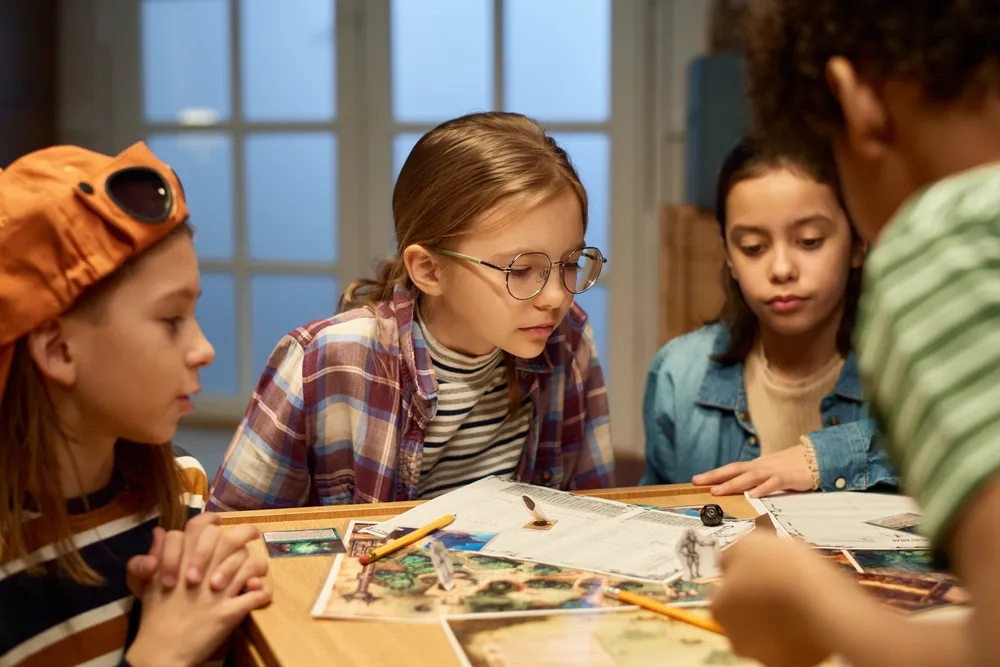
Board games naturally encourage fine motor development.
Picking up cards, moving pieces, rolling dice, and placing components require children to practice precision grips and hand-eye coordination. These skills later support writing, drawing, cutting with scissors, and self-care tasks.
For younger children, especially those in toddler programs, component size matters. Pieces should be large enough to manipulate easily while remaining safe and age-appropriate.
Top 5 Most Famous Board Games for Children Under 7
| Game Name | Age Group | Core Skill | Gameplay Style |
| First Orchard | 2+ | Cooperation & Color Recognition | Cooperative |
| Candy Land | 3+ | Color Matching & Turn Taking | Competitive |
| Outfoxed! | 5+ | Logic & Teamwork | Cooperative |
| Rhino Hero | 5+ | Fine Motor Skills & Spatial Awareness | Competitive |
| Ticket to Ride: First Journey | 6+ | Planning & Strategy | Competitive |
1. First Orchard (Haba) — Best First Board Game for Ages 2+
The Setup
Players work together to harvest fruit before a raven reaches the orchard. Children roll a color die and collect matching fruit pieces from the board.
Why Kids Love It
Young children immediately understand the colorful fruit and simple gameplay. There is no reading required, and every player contributes to the same goal.
We’ve watched toddlers become genuinely excited when helping collect fruit and cheering for the group when everyone succeeds together.
The Early Learning Secret
First Orchard teaches cooperative play before competition.
Many children under three are not developmentally ready for complex winning and losing experiences. This game introduces teamwork, shared goals, color recognition, and basic rule-following in a positive way.
2. Candy Land (Hasbro) — The Classic Color-Matching Game for Ages 3+
The Setup
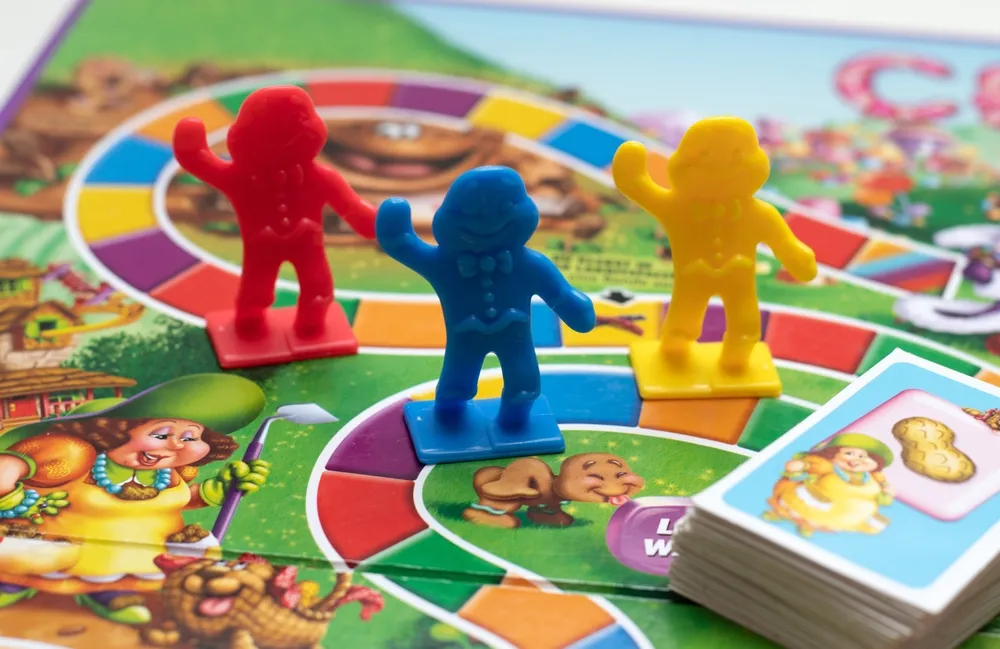
Players draw colored cards and move their character along a colorful path toward the castle.
No counting is required, making it accessible for preschoolers.
Why Kids Love It
The bright colors, imaginative locations, and simple movement rules make the game easy to understand.
Children enjoy the anticipation of moving closer to the finish line and discovering colorful spaces along the path.
The Early Learning Secret
Candy Land quietly develops sequencing skills, visual discrimination, and color recognition.
Our preschool educators often notice that children begin identifying colors faster after repeated exposure to games that require matching visual cues.
The game also introduces patience and turn-taking, two critical social-emotional skills for school readiness.
3. Outfoxed! (Gamewright) — Best Cooperative Strategy Game for Ages 5+
The Setup
Players work together as detectives to discover which fox stole Mrs. Plumpert’s pie before the culprit escapes.
Children gather clues, eliminate suspects, and solve the mystery as a team.
Why Kids Love It
Kids love mysteries.
The detective theme creates excitement while encouraging active participation. Every clue feels important, and children enjoy discussing possibilities with teammates.
The Early Learning Secret
Outfoxed! strengthens logical reasoning, deduction, memory, communication, and collaborative problem-solving.
In our older preschool classrooms, cooperative mystery games often spark some of the richest conversations among children. They learn to explain their thinking, listen to others, and make decisions together.
4. Rhino Hero (Haba) — Best for Motor Skills and Spatial Awareness
The Setup
Players build a tower using folded wall cards and roof cards while carefully placing a rhino superhero figure.
The structure becomes increasingly unstable as the game progresses.
Why Kids Love It
The suspense is irresistible.
Children love seeing how high the tower can grow and eagerly wait to see whether it remains standing or tumbles down.
The Early Learning Secret
Rhino Hero develops hand strength, fine motor precision, balance awareness, and spatial reasoning.
Our educators frequently observe children refining their movements as they become more careful and intentional while placing pieces. These skills directly support handwriting readiness and everyday coordination.
5. Ticket to Ride: First Journey — Best Introduction to Complex Strategy
The Setup
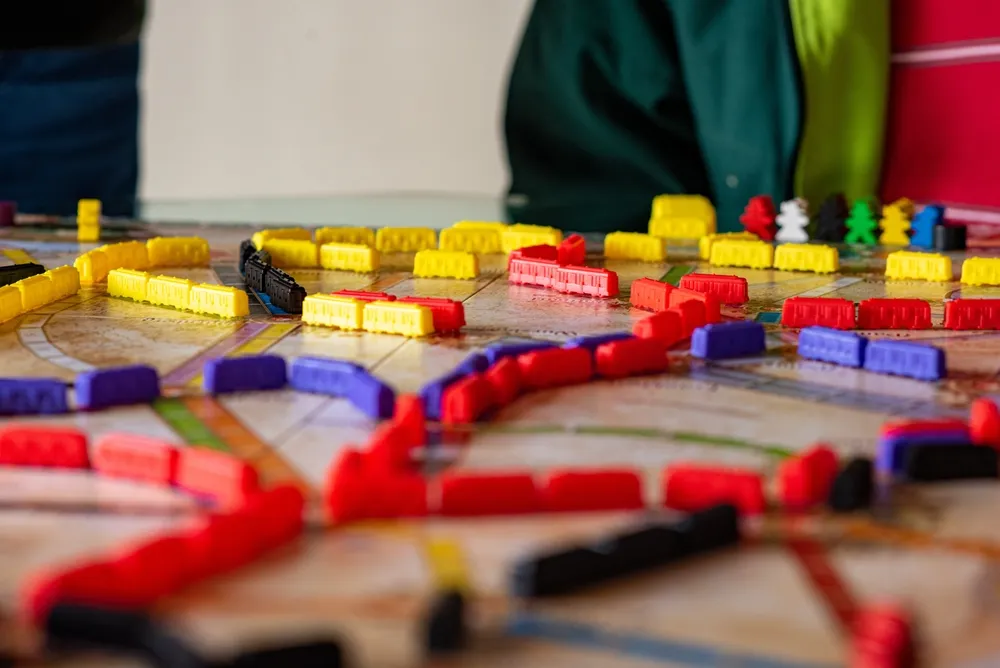
Players collect train cards and build routes connecting cities across a simplified map.
The junior version removes much of the complexity found in the original game.
Why Kids Love It
Children enjoy collecting colorful train cards and completing routes.
The map creates a sense of adventure and exploration that keeps players engaged.
The Early Learning Secret
This game introduces planning, delayed gratification, visual mapping, and strategic thinking.
Children begin learning that decisions made early can influence outcomes later. These executive functioning skills become increasingly important during elementary school.
Buyer’s Guide: Key Features to Look For
Choosing the right board game becomes much easier when parents know what developmental features matter most.
Competitive vs. Cooperative Gameplay: What’s Right for Your Child?
Some children thrive on competition.
Others become upset when they lose and struggle to regulate emotions during gameplay.
For children who are still developing emotional resilience, cooperative games can be incredibly valuable. Games like Outfoxed! encourage children to focus on teamwork rather than individual success.
In our classrooms, cooperative games often help children build confidence while reducing frustration and conflict.
Educational Value: Sneaking in Math and Reading Skills
The best educational games never feel like lessons.
Look for games that naturally include counting, matching, sequencing, memory, problem-solving, or pattern recognition.
Children are far more likely to practice academic skills when they’re immersed in play. A game that encourages counting spaces or matching symbols often provides more engagement than a traditional worksheet.
Frequently Asked Questions About Toddler Board Games
At what age can a child actually understand board game rules?
Most children begin understanding simple board game rules between ages two and three. Games designed specifically for toddlers use visual cues, limited choices, and repetitive actions that match their developmental abilities. By age five, many children can understand more structured rules and strategy-based gameplay.
How can I keep a 4-year-old engaged during family game night?
Choose games that last 10 to 15 minutes, include colorful visuals, and provide frequent opportunities for participation. Keep instructions simple and focus on enjoyment rather than competition. Children stay engaged longer when they feel successful and involved throughout the experience.
What are the benefits of playing board games for early childhood development?
Board games support social-emotional growth, language development, fine motor skills, problem-solving, attention span, and executive functioning. They also teach patience, turn-taking, communication, and emotional regulation. These foundational skills help prepare children for success in both school and everyday social situations.
Learning Through Play Every Day
Children learn best when they’re actively engaged, curious, and having fun. That’s why board games remain one of the most powerful tools for supporting early childhood development. Every turn, conversation, and challenge helps children build cognitive, social, and emotional skills that extend far beyond game night.
At DeeCyDa Day Care Center in Irvine, play-based learning is woven into every part of our educational approach. Whether children are exploring cooperative activities in our Caterpillar Program (ages 1–2.9) or developing school-readiness skills in our Butterfly Program (ages 3–4.9), our educators intentionally use hands-on experiences that nurture confidence, creativity, and growth.
If you’d like to see how structured play supports your child’s development every day, we invite you to schedule a tour and experience the DeeCyDa difference firsthand.